
Some Buyers Prefer Smaller Homes

Appfolio Websites • April 19, 2021

Some Buyers Prefer Smaller Homes
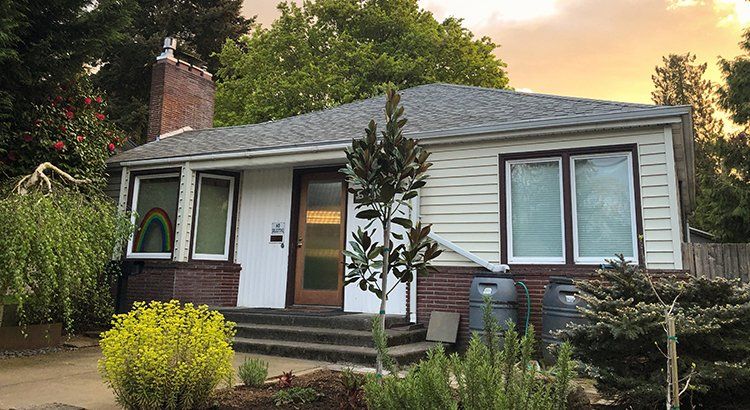


Over the past year, we’ve had plenty of opportunities to reflect on what we consider most important in our lives. The place we call 
home is one of the biggest things many of us are reevaluating. George Ratiu, Senior Economist at realtor.com, shares:

“The very nature of the pandemic, through the health implications, social distancing, and need to isolate, has really brought a central focus on the importance of home for most Americans…In a sense, it has elevated real estate markets as a centerpiece of our lives.”

For some, this has spurred an interest in making a move to a home that better suits our changing needs. In a recent study on today’s homebuyer preferences, the National Association of Home Builders (NAHB) states:

“When asked more specifically how the pandemic may have impacted their preference for home size…21% or about 1 out of every 5 buyers, do want a larger home now as a direct result of the health crisis, while another segment – 12% – would prefer a smaller one instead.”

While you might expect more time at home to lead to a need for more space, it’s interesting that a significant portion of homeowners actually want less. For those who own larger homes right now and have a desire to move, today’s housing market is full of opportunities. Danielle Hale, Chief Economist at realtor.com, explains:

“In a real estate market that is tipped in the favor of sellers, boomers and older homeowners are really the ones holding the cards…Those who are selling homes can use the profits to help them buy new ones.”

As a homeowner today, you likely have equity that can be put toward the purchase of your next home. With the equity growth homes have seen over the past year, you may have more than you think, which can help significantly as you make a move into your next home. According to a report from the National Association of Realtors (NAR):

“Home sellers cited that they sold their homes for a median of $66,000 more than they purchased it. Sellers 22 to 30 years gained the least at $33,400 in equity compared to sellers 66 to 74 years gained $100,000 in equity as they likely had lived in their homes for a longer period of time.”

Despite the benefits of growing home equity, some homeowners are still hesitant to move and could be considering remodeling or making changes to their current space instead. However, if you’ve thought about aging in place rather than downsizing, you may want to reconsider. The U.S. Census Bureau points out:

“Of the nation’s 115 million housing units, only 10% are ready to accommodate older populations.”

If your house is no longer the best fit for your evolving needs, it may be time to put your equity to work for you and downsize to the home you really want.

Bottom Line

Today’s housing market favors homeowners who are ready to sell their houses and make a move. If you’re thinking about downsizing this year, let’s connect to discuss your options in our local market.


Share this post

By The Lighter Side of Real Estate February 13, 2026
A recent Realtor.com article explored whether single-family or multifamily homes build wealth faster. Spoiler alert: it’s single-family homes. At least, that’s what the data suggests. But if you take that at face value, it can make buying a multifamily property sound like a bad decision. The truth is, there’s no way to say that’s absolutely true. Real estate values depend on too many variables to base such a big decision on a headline—or even on solid data that might be right most of the time. The right property, at the right price, in the right market could easily turn that claim on its head. The bigger question isn’t which property type performs better on average. It’s which one makes the most sense for you. For plenty of buyers, a multifamily property can actually help them build equity faster than if they bought a single-family home. In fact, it could be a smarter financial and lifestyle decision for you even if it doesn’t build more equity as quickly. Because for a growing number of buyers, it’s not just about which type of home builds equity faster. It’s about which one fits the needs of their family, or simply makes owning a home at all possible. Is a Multifamily Home Right for You? There are plenty of reasons someone might choose a multifamily property over a traditional single-family home, and it doesn’t always have to be about chasing rental income or investment returns. Of course they’re often owned by investors who are using them to generate income and build wealth, but here are a few types of buyers that also could benefit from buying one: Buyers who can’t quite make the numbers work on a single-family home. For many people, buying a single-family home just isn’t realistic right now. A duplex or triplex can make the math work by generating income from the other units. That rental income can help cover a big portion of the mortgage, sometimes bringing monthly costs down to what they’d pay in rent—or even less. First-time buyers who want to get into the market sooner rather than later. Instead of waiting and saving for years to afford a single-family home, buying a small multifamily property can be a faster entry point. Living in one unit allows you to qualify for a primary residence mortgage, which often comes with better terms than an investor loan. Multigenerational families who need both space and proximity. More families are living together these days, but that doesn’t mean everyone wants to share the same kitchen. (Or more importantly…bathrooms!) Multifamily homes let extended families live under one roof while still having privacy and independence. Buyers who want to turn their first home into a long-term investment. A multifamily home can be a stepping stone. Live in one unit for a few years, build equity, and when you’re ready to move into a single-family home, you can keep the multifamily as an income-producing property. People who simply like the flexibility. Life changes. Maybe you’ll rent out a second unit now, and in the future use it for aging parents, college kids, or a home office. Owning a property with built-in options gives you more ways to adapt as your needs evolve. Making the Best Choice Starts With an Open Mind… And Some Advice Whether you thought owning a house at all was out of the question, or buying a single-family home has been your goal, it’s worth keeping multifamily properties on your radar. They’re not just for investors or people chasing rental income—they can be a practical solution for buyers who want to own now, manage costs, and maintain flexibility for the future. The key is exploring your options thoughtfully. Every property and every market is different. What makes sense for one buyer might not for another, and the “right” choice isn’t always obvious from a quick search or a headline. That’s where a local real estate agent can make a big difference. An experienced agent can help you assess your personal situation, run the numbers on different properties, and identify which type of home aligns with your goals and lifestyle. They can also point out opportunities you might not have considered—like duplexes or triplexes in neighborhoods you already like, or properties with flexible layouts that can accommodate extended family or generate rental income. Thinking broadly and consulting an agent early on can turn what feels like a daunting decision into a clear, practical plan. Instead of limiting yourself to single-family homes, exploring multifamily options could reveal a path to homeownership you didn’t realize was available. The Takeaway: Recent data suggests that buying a single-family home will help you build equity faster than you would if you bought a multifamily. However, choosing between the two isn’t just about which one builds equity faster. It’s about what makes the most sense for your personal situation, your family’s needs, and your path to homeownership. For many buyers, multifamily properties can offer a practical, flexible, and even more attainable way to own a home today—while also creating opportunities for rental income, long-term investment, and adaptable living arrangements. The key is keeping an open mind and exploring your options. A local real estate agent can help you navigate the possibilities, run the numbers, and identify the right property for your goals.
By The Lighter Side of Real Estate February 12, 2026
The body content of your post goes here. To edit this text, click on it and delete this default text and start typing your own or paste your own from a different source.
By KCM February 10, 2026
Why Rising Foreclosure Headlines Aren’t a Red Flag for Today’s Housing Market If you’ve seen headlines saying foreclosure activity has been climbing for 10 straight months , it’s easy to assume that's a sign of trouble for the housing market. But when you look at the full picture, a few simple truths become clear: Today’s foreclosure numbers are in line with what’s considered normal High home equity is keeping most homeowners in a strong financial position None of the data points to a big wave of distressed sales that’ll crash the market Foreclosure Filings Are Up 32%, But That Doesn’t Mean the Market’s in Trouble If you peel the layers all the way back, what everyone is actually worried about is that we’re headed for a repeat of what happened in 2008. Back then, riskier lending practices and an oversupply of homes for sale brought home prices down and led to a significant increase in foreclosures. A lot of people felt the impact. But this isn’t the same situation. Yes, ATTOM data shows foreclosure filings are up 32% year-over-year. And that increase is going to sound dramatic. But context matters, and it doesn’t mean we’re headed for another crash. And the numbers prove it. Take a look at where we were during the last crash (the red in the graph below). And where we are now (the blue): Even with the uptick lately, we are still nowhere near crash levels – far from it. This isn’t a return to crisis levels. What it is, is a return to normal. The graph below shows foreclosure filings going all the way back to early 2005. The lead up to, and the aftermath of, the crash is there in red. Those are the years when foreclosure filings went above the 1 million mark each year. Now, look at the right side and scan back to the 2017–2019 range (the last truly normal years for housing). You’ll see we’re actually just starting to fall back in line with what’s typical for the market, even with the increase lately: Rob Barber, CEO at ATTOM, explains it well: “ Foreclosure activity increased in 2025, reflecting a continued normalization of the housing market following several years of historically low levels . . . While filings, starts, and repossessions all rose compared to 2024, foreclosure activity remains well below pre-pandemic norms and a fraction of what we saw during the last housing crisis . . . today’s uptick is being driven more by market recalibration than widespread homeowner distress, with strong equity positions and more disciplined lending continuing to limit risk.” The word “normalization” in that quote is extra important. While economic and financial pressures are putting a strain on some homeowners, this isn’t a flood of distressed homes. No matter what the headlines may have you believe, this isn’t a large-scale crisis. Today’s increase isn’t a sign of trouble. It’s a return to normal. Why This Isn't a Repeat of 2008 Even though the last housing crash still shapes how a lot of people interpret today’s news, the reality is, this is a different market: Lending standards are stronger Borrowers are more qualified And homeowners have far more equity And that equity piece is especially important. Over the last five years, home prices have risen significantly. For many people, their house is worth far more than they paid for it. That means most homeowners have a strong financial cushion to fall back on, if needed. Basically, if someone faces hardship today, they often have the option to sell, and maybe even walk away with money in their pocket, instead of going through foreclosure. That’s a major contrast to 2008, when many homeowners owed more than their home was worth. Bottom Line Foreclosure activity may be rising, but it’s still well within a normal range – and nowhere close to the danger zones of the past. But the headlines are doing more to terrify than clarify. And that’s exactly why having a trusted real estate expert you can call on is so important. When you hear something in the news or see something on social about housing that worries you, please reach out so you have the context to understand what’s really happening and how it impacts you (if at all).
Show More